
About a month ago I wrote about three channels that had entered my steady watch rotation. Of course I never stop looking for shows and channels to watch. Truth be told, I usually find other good projects by branching off to see what the casts of shows I’m already watching are doing elsewhere. Queen’s Court Games and His Last Hope is no exception, as it involves two cast members from a show I followed on Roll Together.
A brief aside. I hate horror movies. Unless a horror movie has a sci-fi or fantasy angle to it (Event Horizon, Pan’s Labyrinth) I cannot stand most of them. So it surprises the heck out of me that I really enjoy playing and running horror themed TTRPGs. It may very well be that having agency in the story is what makes it enjoyable for me. But whatever the reason, I will watch a horror Actual Play all day before I will even glance at a horror movie.
Enter His Last Hope. This three-part actual play from Queen’s Court Games features the Kult: Divinity Lost RPG, and each pre-recorded episode is released via Twitch on Thursday at 7pm EST/5pm MST. The GM and cast is stellar, working together to weave an intricate tale of the lingering effects of encountering horror early in life. I was lucky enough to ask the cast some questions about their work, TTRPGs, and what we can expect when the finale airs this Thursday.
***
Brent: Thank you all for taking the time to talk with me! For those who might not be familiar with you and your work, could you tell the folks a bit about yourselves?
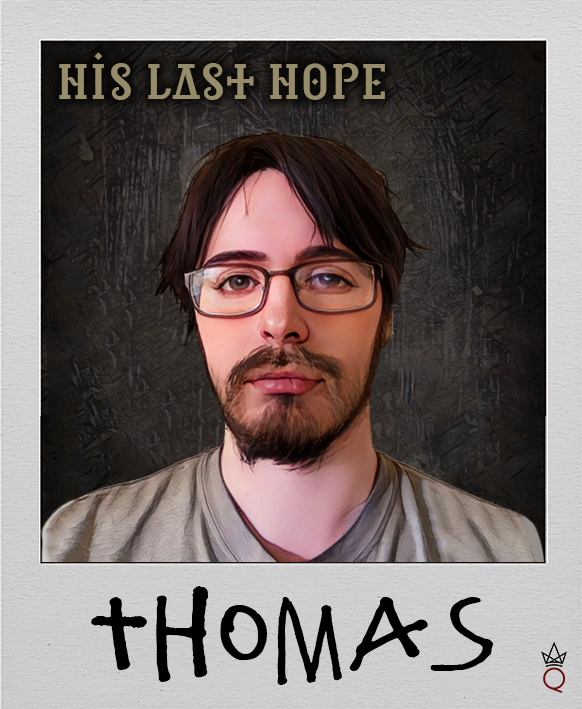
Aaron: Hello, yes! Thrilled to be here, and thanks for the opportunity! I’m Aaron, certified Forever GM, and co-founder and Managing Director of Queen’s Court Games. Together with Vee and Zoe, we put our personal spin on the weird and wonderful world of collaborative storytelling, for Twitch, Youtube, and podcasts.
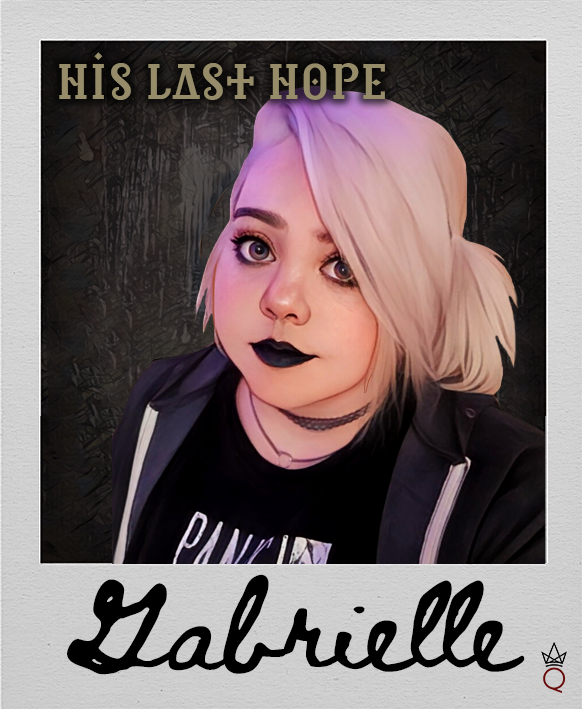
Vee: Howdy! I’m Vee, co-founder and Art Director for Queen’s Court Games. A video game artist by day, I spend my nights creating all the artwork that goes into and comes out of QCG.
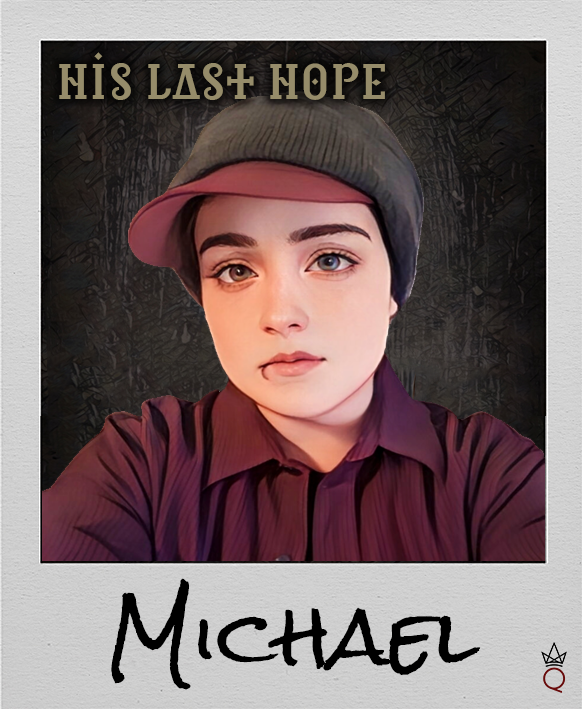
Zoe: Hi Brent! We appreciate you reaching out to us, it means a lot. I’m Zoe, a jack of all trades here at QCG. I assist in editing our podcasts, play in any number of games we’re running, and have written a couple campaigns that are currently in production.
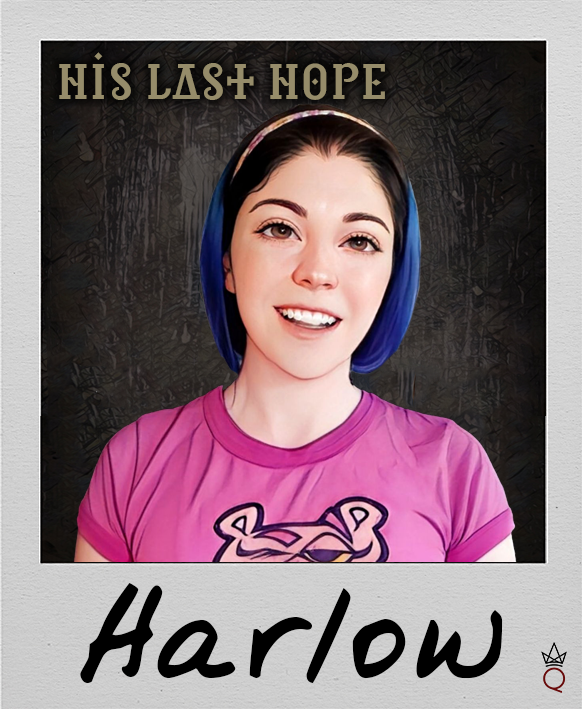
Krissy: Oh hi! I’m Krissy. I make dirty jokes and roll dice. I find myself being invited to a lot of tables (which surprises me as much as, if not more than, everyone else). I’m on Bards & Brews pretty regularly, Roll Together sometimes, and hopefully now floating on with QCG for as long as they’ll have me. I’m found on all the T sites (Twitter, Twitch, Tiktok) as KrissyInColor.
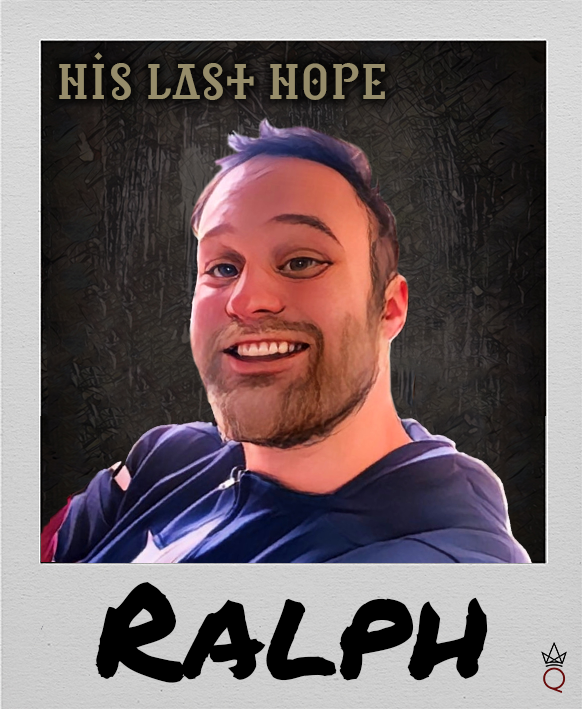
PJ: Hey there! My name is PJ or pjmegaw on most social medias. I love comic books, lifting weights, giving hugs, playing video games, Larping-if you need a mental image of who I am, imagine a golden retriever became human and got into performing. Add some pushups, dirty humor and silly voices. Boom. I am the forever GM of Nat20Productions (nat20productionsofficial on twitch and Nat20Prods on youtube) and I run the shows Wayward Arcadium and Edge of Legend. I can be seen on many awesome shows with QueensCourtGames, TabletopRolls, Yeet4Initiative, LifeActionRoleplay, BlueCollarDM and a few events for JaspersGameDay.
B: How did you start playing tabletop games and what drew you into the hobby? What’s your Hero (or Villain, no judgment) origin story?
Aaron: I’ve been the bookish, nerdy sort from day one. I loved all the standard nerd gateway drugs: Star Wars, Lord of the Rings, video games and then computer games. This was the mid-90s, so small surprise, I was not a popular kid in my early teens. Then one day, my dad came home from the book store with a copy of Advanced Dungeons and Dragons.
That was the game he’d played as a nerdy, unpopular teen. And he’d long since lost the book he bought as a kid, but still had all the memories of playing with his friends in the basement, spinning these incredible tales of heroes and damsels and treasure and magic. He taught me how to play, and then ran a campaign for my small friends group. And tada, here we are today.
Vee: I was dragged into tabletop gaming by my high school bestie, whose dad ran a game on Monday nights after we were done with our conservatory classes. But we didn’t play a ton and eventually stopped playing altogether. It would be a decade or so before I started playing again, and only, hilariously, after Aaron bought me a gift copy of Vampire: The Masquerade Bloodlines because, as I would find out, my life was lacking without it.
As a nerdy girl, Vampires were my favorite creature so I obviously fell in love with the game, found out it started as a tabletop, then forced Aaron to run it for me. When that game eventually fell apart, he dangled the promise of running more Vampire if I played other ttrpgs with him. That was 4 years ago. It took a full Masks of Nyarlathotep run and a couple other smaller campaigns, but I finally got my Vampire game!
Zoe: Honestly I got into tabletop roleplaying thanks to an old significant other. The first game we played was Call of Cthulhu and I was absolutely seduced by the concept. Soon afterwards we tried a bunch of other systems and campaigns and I’ll be honest, I was hooked. There’s something about being able to assume this role of someone else, or as I sometimes say “the me but better” that I find really alluring. My first ever character was Anna Kirsch and she was a German immigrant entertainer for that particular Call of Cthulhu campaign. Anna got into a lot of trouble, even resurrected a fallen teammate from the dead at some point. Which… if you know anything about Call of Cthulhu that’s not exactly a happy situation for anyone. It was a sharp decline from there on out.
Krissy: So I worked in a game store for a while, video mostly, but we had some tabletop stuff, including DICE. God I just loved the dice. The colors and varieties called to me. We also had this commercial that had Wil Wheaton talking about X-wing that played several times a day. I still have “Han Solo ALWAYS SHOOTS FIRST” playing on repeat in my head…ANYWAY it was the dice that first snagged me. Then watching actual plays. Finally an old friend of mine offered to DM for me and…well…here we are. I have a dice addiction and I play like 4 games a week.
PJ: I started around college actually. I mean growing up I would narrate little choose your own adventure games because we all wanted to play Dungeons and Dragons but had no idea how. You could say since childhood but strictly speaking since 2008. I was excited to give this very “nerdy” and not well known thing a try. Growing up with the Satanic Panic I had no real concept of what I was getting into. It was acting with Algebra so of course I was hooked immediately. And it was 4th edition. I know, I know, everyone hates it. I think it was great, it was what it was, and maybe would have done better being packaged as a certain MMORPG table top but what can ya do? So I played my first game as a paladin with terrible stats but in the same game I died with such amazing bravado and sacrifice. That was how it all began…
B: How soon after you started in TTRPGs did you get involved with Actual Play? What are some of the challenges you faced approaching that aspect of the hobby?
Aaron: I’d been playing for around a decade before actual play games were even “a thing.” I cut my teeth on the genre listening to Role Playing Public Radio, and then every other actual play I could get my hands – or ears, I suppose – on. And over time, I started to accumulate this list of things I liked and didn’t like, things I thought were missing from the genre as a whole. That’s when the Creator’s Ego kicked in, that sense of “Hey, why not. I can do better than that.”
And that was half-right, I want to say? I’m so, so, so incredibly proud of the content we put out, but playing is only maybe twenty percent of what makes an actual play. In the beginning, our excitement outpaced our expertise, and we had some rough growing pains when it came to scheduling, production, marketing, social media. That was the first big challenge, I think; managing burnout as we all tried to learn a dozen new skills all at once, while also keeping to a release schedule.
Vee: It was about three years after I started playing TTRPGs, basically when we started QCG! I never listened to actual play podcasts, I didn’t understand the draw of watching things like Critical Role on Twitch, for all intents and purposes I definitely should not have found myself in this scene. But Aaron and I, who have known each other for like a decade, came to me and proposed the idea of making a podcast and I, like him, thought it would be a piece of cake!
For the record, definitely not cake. I’ve baked dozens of cakes, but podcasting is definitely harder! We all had to learn a lot of things very quickly as we struggled to maintain a release schedule and keep the level of quality we all strived for. We also had to learn to be nice to ourselves when it came to asking for mental health breaks and not feeling guilty about needing them, or worrying that we were letting the group down.
Zoe: Ooof. Quite a question. I want to say it was maybe ten or so years after getting into TTRPGs that I found myself doing actual plays. The thing was I was kind of roped in, my first foray into the hobby was “Zoe, come join us on camera and play D&D”. I had never watched actual plays or really listened to podcasts before at that point in my life. Thankfully all that changed and a new and wondrous world has opened up to me. I love this space. I love the creativity of it all, and I am so very excited to put more of myself and what I love out there into the world.
As for challenges, I have some pretty funny ones, but that’s maybe a story for another time. I’m still learning and of course there are still hills to climb, but I’m here for it.
Krissy: I honestly got asked to join some APs within a year of getting into the hobby. I had been a streamer online so a few people, like Alex from Bards & Brews, already knew me and for whatever reason put enough faith in me to be entertaining that they brought me to the table. I did have an AP going with some friends BEFORE Alex but, and this leads into one of the challenges, drama between players caused it to fall apart. It was mostly one person, it usually is. But one toxic or demanding person can ruin a table dynamic. You can’t put on a good performance if you don’t have good chemistry. Also scheduling is another challenge but I feel like everyone can relate to THAT.
PJ: Oh man so long down the road. We didn’t even consider trying it with our channel until 2019 and didn’t go live until June of 2020. It wasn’t my idea at first, some friends wanted to start one and played at a table with me as their GM and it all started from that. We took a leap of faith on ourselves and kinda had to learn as we fell. There’s….so much I can say for the past 2 years of the learning and growing process. Trying to get seen, make connections, create awesome stuff and shows for people, minding the emotions and mental health and social media and hot takes-you’re never not juggling. Its not been easy but I cannot imagine doing anything else.
B: What advice do you have for a person or channel wanting to get involved with Actual Plays?
Aaron: My friends here have captured a lot of the production and technical advice, and that’s great because folks should really understand how much work this can be if you’re trying to do it at a certain level. By the time you consider all the editing and art and administrivia, there’s comparatively little “actually playing” in an Actual Play. As you start thinking about launching your show, have an honest conversation with yourself about what your goals are, and the amount of time, money, and effort it will take to achieve them.
There are a ton of Dungeons and Dragons shows, and it’s easy to get swallowed up in all of that and never find traction. I don’t say that to be dismissive – I absolutely want to see more people in this space, chasing their dreams and sharing their great creative work with the world, and if Dungeons and Dragons is the game that lives in your heart, go make a Dungeons and Dragons show! And then hit me up on Twitter, so I can go watch it! But as anyone in creative work will attest, ambition can be self-sabotaging in that way. If you set out thinking, “We’re going to be the next Critical Role or Adventure Zone!” it’s going to feel awful when you only get ten folks in a stream or a few dozen views on a YouTube video.
On the other hand, if you start out saying, “Huh, I don’t see a lot of people playing my favorite game. I could make a show introducing folks to this hidden RPG gem,” or “I want to tell a story from my particular cultural or life-experience viewpoint,” every single new view is a smash success, one more person you’ve brought into this thing you love. You come out with very different energy. So that’s my advice, I think. Find a niche or perspective or system you think is underdeveloped or unexplored in the Actual Play community, and find a way to put your own creative spin on it. If you’re in love with Fate: the Dungeoning Heist World Powered in the Dark, aspire to be the best actual play for that system.
And don’t worry about the algorithm or the Kickstarter-chasing zeitgeist. If you make an authentic, heartfelt product, the audience will come.
Vee: Set your goals and expectations ahead of time, but temper them. The worst thing somebody could do for themselves when getting into this scene is expecting to become the next Matt Mercer because when/if that doesn’t happen it can feel like you’ve failed. Obviously it’s one thing to have long-term aspirations, but it’s another thing entirely to get down on yourself if your numbers aren’t at Critical Role levels in the first three months.
It’s also necessary to decide the things that are important to you from a branding perspective before you begin. Take QCG, for example. Before we started The All Night Society we knew that we wanted to make an actual play that felt more like an audio drama, so while it’s not scripted we knew we were going to edit our audio to remove a lot of the rules talk, dead air, and any side conversations that detract from the story. (Obviously this isn’t to say that our way is the best way, it’s just what we decided we wanted our brand to be.)
Lastly, make sure you’re having fun. Yeah, you want to come at it with an air of professionalism, but one of our core values at QCG is “nothing matters if we’re not having fun.” If we’re just pumping out content to get it out the door but we’re not enjoying ourselves, it all comes out in the recordings and that’s not fair to us as players or to the audience.
Play what you want to play, stay true to your branding in whatever form that takes, and have a blast doing it
Krissy: So I know from personal experience streaming that people tell you you don’t need a nice mic or a nice cam to get into the hobby; and technically you DON’T, but I personally find people are more likely to stick around when those things are even halfway decent. Like you don’t need super high quality, but people need to be able to see and/or hear you clearly. Personally I’d opt for a decent mic first because bad audio quality is much more likely to annoy people than poor video. Again, all of that is just my experience. Also, brush up on using your socials. I know a lot of great groups and performers that don’t get to shine as much as they deserve because they simply don’t know how to put their name out there, OR groups that try a little too hard and end up venturing into the land of spamming people. It’s a delicate balance. There are a lot of social media channels, and having a cast that can help you round out your presence in them will get you pretty far imo. Just keep your interactions with others genuine and don’t self promo on other people’s posts…unless it’s a self promo post, of course.
PJ: As much fun as the games are the bottom line that people need to accept is that it is a production. Do what you can to put your best foot forward. Make sure your tech and quality of presentation is enjoyable; audio, tech, graphics, socials etc. Your players are also your actors and they have to work well together to enjoy the game but also present entertaining content. I think the best advice someone gave me is that change is always good but only when it’s an enhancement. The audience will notice when there are changes and if its sliding backward a bit. Some people will sense it’s decaying and leave for lack of interest. It’s not pretty and can be hard to talk about but if you can accept these things, and still have fun, that’s how you know you’re doing it right. After that, it’s all patience and hard work on social media, and planning. In less depressing stuff, find people you can trust, people that want to be there, people that you have fun with. Get your team. Then do the damn thing!
Zoe: It doesn’t hurt to play in more games, even casual non streamed stuff to try new things, sharpen your skills, and find new ways to get into a role. I love trying new things and meeting new people so this an obvious win-win strategy for me. In this hobby or business you really have to do what you enjoy. What’s the saying? No D&D is better than bad D&D? I think that applies to this as well. If the vibe is off in your group the performance will likely be off as well. Whenever I start a game I try to impress on my players the need to have a good time. It’s my first and foremost concern.
I know the others touched on this but your equipment matters. Though everyone’s financial situation is different and in lieu of that making sure your recording environment is as clean as it can be, and with as little interference as possible.
What I really want you to take away from my advice… don’t be afraid to reach out and make new friends. It’s a wild ride and it’s a lot more fun with company.
B: What drew you to a game like Kult: Divinity Lost? Is horror in TTRPGs something you like to explore regularly, or as more of a change of pace?
Aaron: For the longest time, role playing games only meant Dungeons and Dragons. It was the only game I knew, and the only game I played. I suppose that’s still the case for a lot of people, and the hobby more generally. It wasn’t until I was in college when a sophomore I was very enamored with invited me to play in the campus Vampire: the Masquerade LARP.
I went to the first session because I very much wanted to date her; I went to the second session because I fell in love with this new perspective on what games could be about. The characters weren’t all-powerful heroes, the monsters didn’t wait patiently in their lairs for the goodly knights to best them in battle. It opened my eyes to what the World of Darkness calls “personal horror.”
There’s always room for being the big damn hero – I’m not here to gatekeep the hobby or anything like that – but for me, I love games that let us pluck some kind of evil out of the real world, or even out of our own experiences, and put it somewhere it can be tangled with, fought against. Horror games let you stare down things you’d shrink away from in real life by adding this layer of abstraction. Dice. Characters. Rules. All the fear, but – if you’re using your safety tools correctly – much, much less risk.
Vee: Firstly, I want to say that I’m not sure I would play KULT with just anybody. It’s a true horror game and, when done correctly, it pushes people to really deep dark places, scratching and poking at your limits. I feel super safe exploring these things with everybody at this table, especially with Aaron as my GM because I’ve known him for so long and he knows where the boundaries of my comfort zone are and how to tug at these insecurities in just the right way.
But that’s what I’ve really loved about KULT every time we’ve had a chance to play it: getting to tell a really horrifying story and uncovering the mysteries of this horrifying world in a way that prioritizes roleplaying over rolling dice to act. Really, I’m just a sucker for a good story, which is what draws me to the World of Darkness, too. It’s also a nice change of improv pace to play something heavy and deep with emotional peaks and valleys as opposed to playing something like D&D which tends to not have the same struggles. Though it is nice to go play something lighthearted after playing KULT, it is too emotionally rough to play back-to-back.
Zoe: There’s a lot of things that really draw me to KULT. For one I’m falling more in love with the simplistic RPG systems. Rules light, narrative heavy. As I delve more into Powered by the Apocalypse I find myself enjoying the freedom that it brings, and KULT, while different in some respects, is also very similar. That said, I started my roleplay experience with Call of Cthulhu, so tabletop horror will always have a special place in my heart.
Krissy: I feel like I mostly get invited to do light hearted games, so yes. I absolutely jump at the chance to do something with a little more kick. Kult specifically intrigued me in for a few reasons; the artwork, the tarot based character creation (which we didn’t do this time but I hope to get to do if brought on for future games), and also I am a child of religious trauma so the inherent themes of the story just pack a punch…in a good way.
PJ: What drew me into TTRPGs in the first place was trying something new, something I never had an understanding of. After almost 15 years of playing table tops and the conversations around it, it’s nice to try something very different. The thing that is not WOTC and DND, great as they are, they’ve become too ubiquitous and a little tiring. Having something that goes darker, gets meaner, respects but also challenges players is a nice refreshing change of pace. I will say I am not a horror guy. At all. With my imagination? Bad times. But getting to still experience something so powerfully unique is rare and honestly, a treat.
***
[EDITOR’S NOTE: At the time of this interview the first two parts of His Last Hope have aired and you can catch up on those over at Queen’s Court Games on YouTube. Then you’ll be all set to watch the finale this Thursday at 7pm EST on Twitch.
Brent will return with the remainder of this interview later this week. – dc]
You can find Queen’s Court Games online at queenscourt.games or on Facebook at facebook.com/QueensCourtGames.
You can learn more about Helmgast’s Kult: Divinity Lost online at kultdivinitylost.com or on Facebook at facebook.com/kultdivinitylost.
