

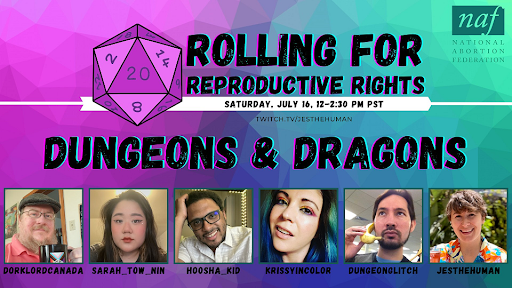
This coming Saturday I am running a D&D game for the first time in a few years. I have a great group of players and I’ll be running a fun little adventure from Uncaged Anthology Vol.1, entitled “The Guardian of the Forest”. It’s for a great cause and you should absolutely check out the games running on both days.
This game is giving me the chance to dust off some D&D house rules I only got to try a few times before I set D&D aside a few years ago. A lot of what I came up with is relevant mostly to long term campaigns; since this session has a hard limit of two and a half hours, they aren’t relevant. But I did come up with a few house rules designed to speed up play and remove (what I consider) the annoying swinginess of skill checks in D&D.
I’ve never been a fan of the binary nature of skill checks. “Roll a d20, beat a DC” is a very simple mechanic and easy for folks to learn. But it means that at least some of the time (sometimes most of the time at low levels) players will fail skill checks, often with skills they have trained in and built their character around. If they make a wizard with an amazing Arcana bonus, they rightfully expect that wizard to rock Arcana checks and it feels bad when the dice say no. And I get that no one is perfect at what they do all the time, but these are heroes. They should be good at what they do more often than most.
So I borrowed a mechanic already in D&D 5e and extended it to all skills. Intuition, Investigation, and Perception already allow for the use of the passive check; 10 + skill bonus + ability bonus + proficiency bonus = passive score. If your passive score in any of those three is higher than the DC, you succeed. So what about the rest of the skills? Why couldn’t that be extended to other skill checks, with the “passive” score representing the character’s basic competency in the skill? Instead of asking for a roll, the DM can compare the passive Arcana score of the aforementioned wizard to the DC of the skill check. If the wizard’s passive score meets or beats it they get the information from the check. If it doesn’t, they still have the option to roll for it, hoping the dice will give them the extra nudge they need.
Some folks may criticize, saying it takes the fun out of skill checks. After all, we’ve all had characters fail spectacularly in situations where we really needed them to come through with that clutch skill roll, and then have to play around that. I would counter that by saying that many of the skill checks I see in written scenarios seem to be low or no stakes. By that I mean, most checks serve to give the players something to do without having any serious consequence. Not all, by any stretch. Obviously if your party is hanging from a collapsed rope bridge over a rocky chasm, there are stakes involved. But in that situation, it makes sense that the party fighter or rogue should find climbing up the collapsed bridge relatively simple (passive Athletics or Acrobatics), while the cleric might struggle with the same task. But that makes this the moment for the fighter to shine, not only easily overcoming the obstacle but finding a way to save their party from painful doom.
Let’s take the idea of the passive check even further. What if we applied it to combat? Let’s use a level 1 fighter with a Strength score of 16 as an example. Our fighter would have a passive combat score of 15 (10 + 3 (strength bonus) + 2 (prof. bonus). So any opponent with an AC of 15 or lower would be hit automatically, with damage then rolled as normal. As with skill checks, if the passive score is not higher than the AC the player can opt to roll instead.
At this point I imagine some folks are upset that this might make combat too easy. I counter that with a few points to consider:
- It only makes combat easy against easy opponents
- While the hit is automatic the damage is not; a player can still roll low damage and resistances, immunities still apply
- There is no critical possible on a passive combat check, so the player is forgoing that possibility.
- I limit the use of the passive combat score to the first attack the character makes each round, any iterative attacks must be rolled as normal. Once the first strike lands the opponent(s) have their chance to react and the chaos of combat asserts itself.
Look, passive skill checks and combat checks may not be for everyone. Some folks love the randomness of dice rolls and want that swinginess when they play. Since the player always has the option to roll their dice instead, nothing I have suggested here deprives those players of anything. But the few times I was able to use these rules in a game, I found it removed a lot of unnecessary dice rolling and failure points. The rogue was able to pick the lock with ease instead of leaving it in the hands of fate, so they looked like the badass thief the player wanted them to be. The 10th level fighter didn’t struggle with bad dice rolls when facing off against the goblins, allowing them to have that cinematic moment of a skilled warrior facing down a group of inferior foes. While some of the randomness was gone, overall it was replaced by players excelling at the things they wanted their characters to excel at, and feeling like big damn heroes.
I hope you’ll try passive skills and combat at your table and tell me what you think. In my estimation it gives more to the player experience than it takes away, but please try it out with your players, or encourage your DM to give it a try.
And tune in this coming Saturday at Noon PST to see these house rules in action, with some of the finest players to grace a table! Rolling for Reproductive Rights is an amazing event in support of reproductive rights, a vital cause that needs our support, now and forever. See you there!
